Thursday, March 21, 2013

Why English Is So Hard

This poem demonstrates the challenges of learning English. So many exceptions to the rules.

We’ll begin with a box, and the plural is boxes,
But the plural of ox should be oxen, not oxes.
Then one fowl is a goose, but two are called geese,
Yet the plural of moose should never be meese,
You may find a lone mouse or a whole nest of mice,
But the plural of house is houses, not hice.
If the plural of man is always called men,
Why shouldn’t the plural of pan be called pen?
The cow in the plural may be cows or kine,
But a bow if repeated is never called bine,
And the plural of vow is vows, never vine.
If I speak of a foot and you show me your feet,
And I give you a boot would a pair be called beet?
If one is a tooth, and a whole set are teeth,
Why shouldn’t the plural of booth be called beeth?
If the singular’s this and the plural is these,
Should the plural of kiss ever be nicknamed keese?
Then one may be that and three would be those,
Yet hat in the plural would never be hose,
And the plural of cat is cats, not cose.
We speak of a brother, and also of brethren,
But though we say mother, we never say methren,
Then the masculine pronouns are he, his and him,
But imagine the feminine she, shis and shim,
So the English, I think, you all will agree,
Is the queerest language you ever did see.

Wednesday, December 12, 2012

Words with same pronunciation - "Homophones"

Many of my students are surprised to find out that the following three words are all pronounced the same:

they're, there, their  

Here are some more homophones which might surprise you.  If you have been pronouncing these words differently, it's an understandable error.  English spelling is crazy!

Same pronunciation:

berry - bury 
atom - Adam
do - due (in British English they're different)
billed - build
so - sew 
son - sun
metal - medal
wore - war
won - one (this one always surprises people)

Which ones surprised you?

(You can find a list of other homophones in my book, "Mastering the American Accent")

Saturday, September 1, 2012

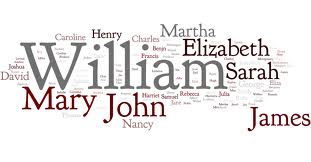
Is Your Foreign Name Easy to Pronounce?

Many of my foreign-born students have names that are difficult for native speakers of English to pronounce. Some of them decide to change their name to a similar sounding English name, and others prefer to keep their original name and just accept the fact that they will have to teach people how to say it.

Here is an interesting article about research done by  business professors of three major universities about how the pronunciation of your name might affect your professional success. According to them, if your name is easy to pronounce you are more likely to get ahead. Adam L. Alter, professor or marketing from New York University, says:  "People tend to feel more positive about things that are easy to process mentally, and with work colleagues that means better relationships.”

read article here. 

What are your opinions on this topic?  What are your personal experiences? 

 Here are my thoughts:

  • Your foreign name may contain sounds that do not exist in English. Will it bother to hear your beautiful name wrongly pronounced ALL the time?
  • If you keep your original name, be prepared for regular comments such as "What kind of name is that?" and "Can you tell me your name again?" Will that annoy you after a while? 
  • Some people may actually perceive your accent to be stronger due to your foreign sounding name. It happens subconsciously. 
  • If you are getting a job which requires you to regularly interact with new people, a name that is easy to pronounce will make life easier.  But if you work with the same colleagues every day, using your foreign sounding name would be much less of an issue. You'll have time to teach everyone how to say it. 

Friday, August 24, 2012

American vowels and good word stress

Watch this student from India. He's been practicing with my American Accent teaching materials. He just sent me this video. I am impressed. He sounds like he lives in the United States. Don't you agree?
He is stressing the words well, speaking clearly and pronouncing the vowels correctly.  Is your accent as good as his?  Send me your videos.

Wednesday, August 8, 2012

How does your accent sound?

This student from Brazil practiced his American accent by watching my YouTube lessons.  Great job, Wagner!   

I want to see more videos from you guys. If I think your accent sounds good, I will post your video here on my blog.   

First, view all of my accent reduction lessons on my YouTube channel and then chose one.  And then practice, practice, practice! 


Thursday, June 7, 2012

The Rhythm and Melody of English

Here is a short exercise to help you with word stress and rhythm. 
First, here are some general rules:
  • Stress key words (content words), which are generally nouns and verbs.
  • In longer sentences, stress the last key word the most. 
  • Reduce prepositions, pronouns and articles (function words)
(There are other more specific rules and exceptions, but this can give you a general idea of how English word stress works.)

Now, let's practice reading the below paragraph. The words in bold should be stressed. The underlined word gets the most stress.  Pause between the slash lines.

Practice exercise:

excerpt from speech by Steve Jobs, Stanford University, 2005 

You've got to find what you love.  And that is as true for work // as it is for your lovers. Your work is going to fill // a large part of your life, //and the only way //to be truly satisfied // is to do what you believe is great work. And the only way to do great work// is to love what you do. If you haven't found it yet, keep looking -- and don't settle. As with all matters of the heart,// you'll know when you find it. And like any great relationship,// it just gets better and better as the years roll on. So keep looking -- don't settle.

For additional rules and practice, you can purchase my DVDs, "American Accent Course - 50 Rules You Must Know." 

Thursday, April 12, 2012

Too old to improve your accent?


I sometimes get phone calls from people in their 30's and 40's who think they are too old to change their accents. No, you are not too old!

I currently have three students in their 60's who have been making great progress with reducing their foreign accents. In fact, they have been making better progress than some of my younger students! (One is a nurse from Korea, one is a business owner from Argentina, and one is a high school teacher from Uruguay.) I am so proud of them. Their hard work and dedication are an inspiration to me. All three have the following traits in common:

1. They are highly motivated to reduce their accents because they believe a thick accent is holding them back.
2. They practice regularly.
3. They don't give up easily and they are patient with the learning process.
4. They have achieved a lot in other areas of their lives through hard work. This has helped them to develop the self-discipline that is needed.
5. They are not overly self-critical when they make mistakes.

From my experience, these above traits are often more important than age. (unless, of course, you move to an English speaking country as a child)